

"Legacy: Mentoring and Maintaining” | Pastor Julie Hamilton
What kind of faith are we leaving behind?
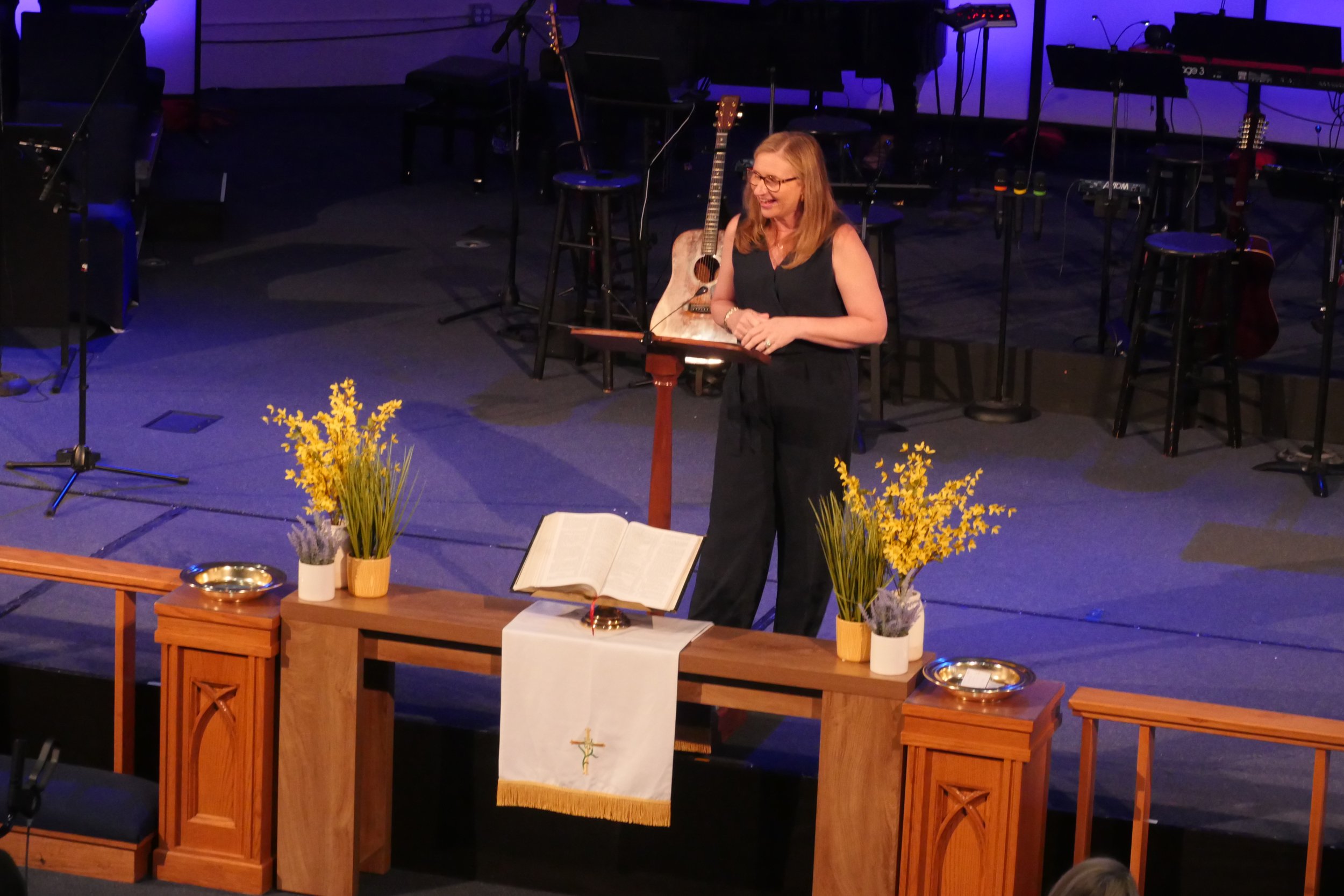
That question sits at the center of Legacy, a new series at New Hope Church. And on Mother's Day, Pastor Julie Hamilton opened the series with a message that pressed beyond the general and into the personal: not just what faith are we leaving, but where do you fit in passing it down?
Scripture: Psalm 78:1–7
Psalm 78 was written by Asaph — a Levite musician in the court of David — as a maskil, an instruction. It opens with a direct command:
"We will not hide these truths from our children; we will tell the next generation about the glorious deeds of the Lord, about his power and his mighty wonders." — Psalm 78:4 (NLT)
This was never a suggestion. Faith was always designed to move — not to settle with one generation but to be handed forward, deliberately, to the next.
The Family of Faith
Pastor Julie opened with a picture most of us know: family dynamics.
Every family has its personalities. The outspoken aunt. The adventurous cousin. But beneath the quirks and the chaos, Scripture uses the family as a picture of the church for a reason — because it reflects something true about how we are meant to live.
We do life together. We care for one another. We celebrate and grieve together.
Paul's letters to Timothy carry this same thread — encouraging Timothy to lead the church as a family, treating others as mothers and fathers, sisters and brothers. This generational relational connection runs throughout Scripture.
And it raises a pointed question for New Hope: are we only living in the present — enjoying what God is doing right now — or are we intentionally preparing for what comes next?
Where Do You Fit in the Family Tree?
Think about what a healthy family looks like. Parents provide stability — they create the environment where faith is formed and traditions are taught. Grandparents offer wisdom shaped by years of experience. Siblings and cousins walk alongside us. Aunts and uncles reinforce the values of the family.
Every layer matters.
Now bring that into the church. Your small group probably feels like siblings. But who is your spiritual parent or grandparent? Who is speaking into your life with the kind of seasoned, rooted perspective that only comes from years of walking with God?
And — just as important — who are you that person for?
It's hard to play a spiritual role in the family if you can't see where you fit in the tree.
Roles by Stage, Not Age
Here's where the message shifted.
In the family of God, roles aren't determined by age. They're determined by stage.
A 28-year-old can spiritually "grandparent" a 6-year-old in the faith. A 16-year-old can "parent" a 45-year-old who is new to following Jesus. Spiritual maturity doesn't follow a birth certificate — it follows formation. Scripture. Prayer. Years spent connected to the community of faith.
That's why we cannot sort ourselves by age and call it community. We need each other across every stage.
The House
Pastor Julie offered a simple image that gets practical fast: put your church family in a house.
A house doesn't maintain itself. Things break and someone fixes them. Laundry piles up and someone washes it. The refrigerator is only useful when someone goes shopping. The yard grows — and if no one trims it, the house slowly becomes inaccessible from the outside.
Everyone in the house contributes according to their ability. Without that maintenance, the house becomes unlivable.
The church is no different.
What Is a Maintainer?
A maintainer is someone who intentionally invests in the health, stability, and future of the family — preserving its values, sustaining its rhythms, and preparing others to carry it forward. Applied to the modern church, maintainers aren't tied to age as much as temperament and calling.
Maintenance is not glamorous. But it is essential.
It creates stability. It builds rhythm. It establishes consistency and trust. It preserves values, passes down traditions, and prepares the next generation to carry what matters forward.
And none of it happens accidentally. It requires intention, care, follow-through, and teaching.
This role is not about age. It's about calling.
Biblical Maintainers
Scripture is full of them — and they don't fit a single mold.
Aaron sustained the spiritual structure of Israel, handling the ongoing rhythms of worship and sacrifice while Moses led. Nehemiah rebuilt and restored what had been broken so the community could thrive again. Barnabas is remembered as a missionary, but his quieter work was stabilizing — helping ground new believers in their faith.
Phoebe, described in Romans 16 as a deacon and benefactor, supported the church materially and logistically. Priscilla and Aquila hosted a house church, discipled Apollos, and created stable environments where people could grow. Timothy was sent by Paul not to plant new churches, but to organize, correct, and strengthen existing ones.
None of them were passive. None of them were background players. They were faithful, intentional servants — and their maintenance made the mission possible. They represent stability, creativity, assertiveness, and humility. Most of all, they were on mission.
Your Job Description
Pastor Julie shared something personal: years ago, as a new mother, she wrote a "job description" for her role as a mom. She still carries that card in her prayer journal. When she came across it recently, she laughed — because the woman who wrote it had no idea what was actually coming.
But she also recognized something had shifted. She had moved from pioneering — where everything is new and unknown — to maintaining, with a confidence that only comes from aligning your identity with how God sees you.
Both matter. Both are needed. But you can't do either well if you don't know where you are.
So this week, the challenge is direct:
Write your job description in the family of God.
Not a title. Not a label. Not a position. Your function. Your contribution. Because you cannot effectively mentor, lead, or disciple the next generation if you don't understand what you bring to the family.
The Question We're Left With
Are we maintaining with our eyes on what God has next?
Are we intentionally passing down our faith — while preparing for the future?
Or are we just living in the present, surrounded by, as Pastor Julie put it, dirty laundry and empty refrigerators?
If you're not dead, you're not done.
Listen to and subscribe to the audio-only podcast with your favorite podcasting app below.
Your giving is an act of worship. Your giving supports the mission and ministry of New Hope. We are changing lives, renewing the church, and transforming communities, here and abroad.
More Sermons in this Series
Other Sermons from Pastor Julie


Pastor Vicki Harrison opens Acts 2 on Pentecost Sunday and asks a question that reframes everything: what if revival isn't something we're waiting for, but something we're witnessing right now — especially among the next generation?