

"Let The Lion Roar: Escape Plan” | Rev. Vicki Harrison
At New Hope This Sunday
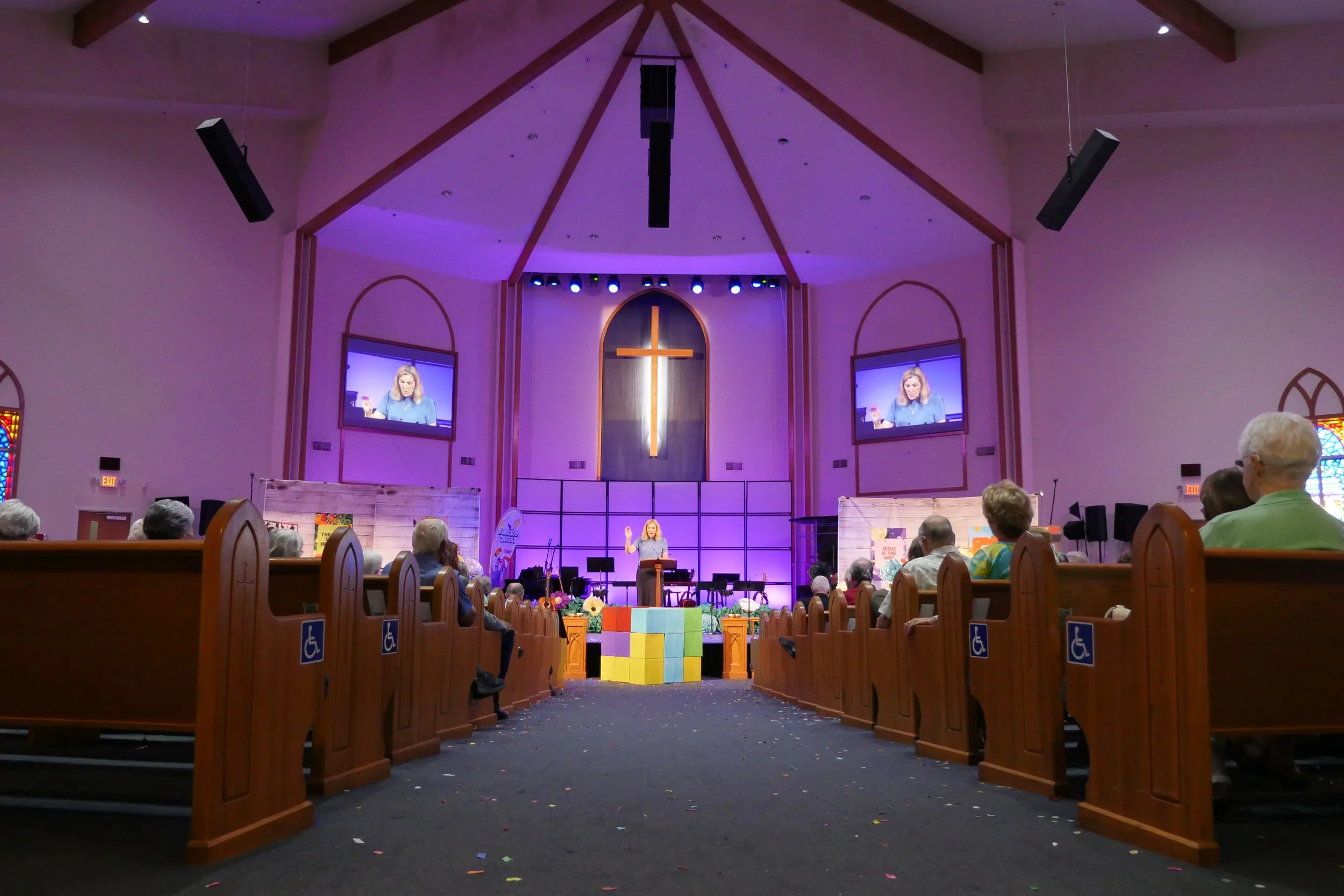
This Father's Day, New Hope opened with a celebration of the week that just wrapped: Vacation Bible School. Pastor Julie Hamilton shared that 207 children registered, with a daily average of about 160 on campus, served by roughly 50 volunteers each day. The morning carried a joyful, family feel — VBS friends danced up front during worship, and the church recognized dads and spiritual fathers alike. We also welcomed new members: the Maguire family — Lacey Maguire and her children Max, Noah, and Luke — joined the church, with Pastor Vicki Harrison and Pastor Roberto Chaple leading the welcome and a prayer over the family.
A few things coming up, if you missed them:
Spark kicks off in July.
Next Gen Conference (geared toward ages 16–30) — registration via the QR code on the flyer or the church website.
Fall Kickoff is coming in September — watch the lobby and website for details.
July 5 — two services: a typical 9:30 AM worship service, plus a special 11:00 AM service of prayer and celebration for the nation's 250th anniversary.
Let The Lion Roar: Escape Plan
There is a moment in Amos 5 that should stop any worshiper in their tracks. To a people still showing up — still singing, still sacrificing, still keeping the religious calendar — God says, in effect, I want none of it. "I hate, I despise your religious festivals" (Amos 5:21). This Sunday, Pastor Vicki Harrison opens Amos 5, continuing the "Let the Lion Roar" series, and walks through a chapter that reads first like a funeral and ends like an open door. The prophet's message is severe, but it is not hopeless. Woven through the lament is an invitation — an escape plan for a people heading the wrong direction, if only they will turn around.
A Funeral Song for the Living
Amos 5 opens not with a threat but with a dirge. "Hear this word, Israel, this lament I take up concerning you" (Amos 5:1). The prophet sings a funeral song over a nation that is still very much alive — picturing a fallen young woman, deserted in her own land, with no one to lift her up (Amos 5:2-3). It is grief sung in advance, a warning dressed as mourning. Amos refuses to pretend everything is fine; he names the trajectory out loud while there is still time to change it. A lament sung over the living is, in its own way, an act of mercy.
Seek Me and Live
Then comes the turn, and it arrives quickly. "Seek me and live," God says (Amos 5:4), and the call is repeated: "Seek the Lord and live" (Amos 5:6). The same God who sings the funeral song offers the way out of it. This is the escape plan in its simplest form — not a program or a performance, but a return. The invitation is not to try harder at religion but to seek the God who is still reaching toward a people who have wandered. It is the hinge of the whole chapter: judgment is real, but so is the door, and the door opens by seeking the Lord Himself.
Justice in the Gate
Amos does not let the call to seek God float as an abstraction. He drives it straight into how the people treat one another. They "hate the one who upholds justice in court and detest the one who tells the truth" (Amos 5:10). They trample the poor, take levies of grain from them, and build fine homes they will never enjoy (Amos 5:11), oppressing the innocent and depriving the needy of justice in the courts (Amos 5:12). Worship and justice are not two separate departments in God's economy. A people cannot claim to seek the Lord on the Sabbath while crushing their neighbor in the gate the rest of the week. The injustice exposed here is the evidence that the seeking has gone hollow.
Seek Good, Not Evil
Out of that exposure comes a clarifying command: "Seek good, not evil, that you may live" (Amos 5:14). To seek the Lord is to seek what the Lord loves — "Hate evil, love good; maintain justice in the courts" (Amos 5:15). And attached to it is a sober, honest hope: "Perhaps the Lord God Almighty will have mercy" (Amos 5:15). That word perhaps is not weakness but humility. It refuses to treat God's grace as something owed or automatic. The escape plan is genuine, but it is not a transaction; it calls for a people who turn toward good because they have turned back toward the God who is good.
The Day You Thought You Wanted
Then Amos confronts a dangerous assumption head-on. The people were longing for "the day of the Lord," imagining it as their vindication. The prophet shatters that: "Woe to you who long for the day of the Lord! ... That day will be darkness, not light" (Amos 5:18). For a people living in injustice while keeping up appearances, the day they thought they wanted is not the day they imagined. It is a warning against false confidence — the assumption that religious identity alone secures God's favor — leaving the people with the same choice the chapter has pressed all along: keep up the appearance, or actually return.
Let Justice Roll On
All of it lands in one of Scripture's most famous lines. God rejects the hollow worship — the festivals, the offerings, the songs — and then says what He actually wants: "But let justice roll on like a river, righteousness like a never-failing stream!" (Amos 5:24). God is not after the performance of worship disconnected from the life behind it. He is after a people whose worship and whose daily conduct flow together, steady and unforced, like water that never runs dry. The escape plan was never about better singing. It was about a life that matches the song.
Our Daily Life Matters to God
That is the bottom line Pastor Vicki carries through the whole chapter: our daily life matters to God. Amos 5 will not let worship and weekday be separated. What we do Monday through Saturday matters to God. The God who rejects empty festivals is the same God who calls for justice in the gate — because He cares about the whole of a life, not just the religious slice of it. The escape plan is not an exit from consequence; it is a return to the kind of life God designed His people to live, where seeking Him on Sunday and doing good on Monday are the same movement.
This is a hard word for the church, too. Across history, God's people have worshiped on Sunday and committed injustice on Monday. Pastor Vicki points to a memory from a trip to Mozambique: along the coast stood a place where slaves were once held — one room where captives were shackled, waiting to be shipped to the new world, and the very next room a chapel where the Portuguese slave traders gathered to worship. The shackled could likely hear their captors lifting their voices to the Lord. She cannot imagine what God thought of that worship. The point is not to settle every historical debate but to ask an honest question of ourselves: what have we tolerated, participated in, or ignored? The church cannot have a better past, but it can learn from it.
We Are Plan A
So what does a congregation actually do with this? Pastor Vicki does not hand out easy answers; she insists this is something the body of Christ has to discern together. But she names the calling plainly. What is God's plan for justice in this world? We are. "We are plan A, and there is no plan B." The church has been called to be instruments of God's perfect justice — not out of fear or obligation, but because we have received an extraordinary gift in Jesus and we want others to live as free people, too. Living on this side of the cross does not lower the bar; if anything, it raises it. We know Jesus, we are filled with His Spirit, and we are called to live out His mission of love for God and neighbor.
To live that out, Pastor Vicki invites the church to plead with God regularly:
to help us be more conscientious of past and present mistakes, and of how we worship and obey Him;
to help us be more humble and receptive to correction when our living is out of step with God's sense of justice;
to help us be quick to repent.
She closes by calling New Hope into a season of prayer and fasting — a sustained, listening posture rather than a one-Sunday thought — asking God what burden He is placing on each heart for the poor and vulnerable, and where He is calling the church to act (see 2026-07-01 Prayer & Fasting Calendar – Campaign Master). The funeral song does not have to be the last word. There is still time to seek the Lord and live — and a God who is still saying, come back.
Listen to and subscribe to the audio-only podcast with your favorite podcasting app below.
Your giving is an act of worship. Your giving supports the mission and ministry of New Hope. We are changing lives, renewing the church, and transforming communities, here and abroad.
More Sermons in this Series
Other Sermons from Pastor Vicki
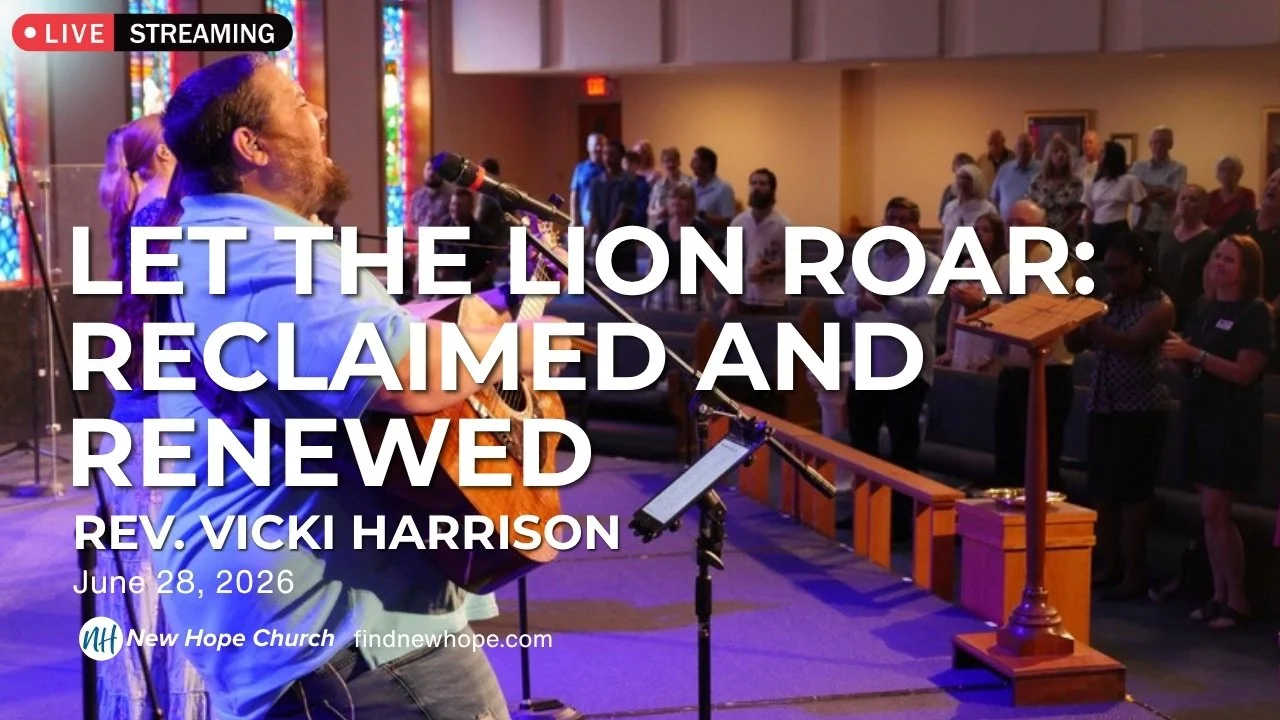
Amos 9 brings the Let the Lion Roar series to a close with a hard word and a hopeful one: judgment is real, but God is not finished. Next Sunday, Pastor Vicki Harrison opens the final chapter of Amos with a message about rebuilding, restoration, and the kind of renewal that reaches all the way into the future.