

"Learning from Jesus: What is truth?” | Rev. Vicki Harrison
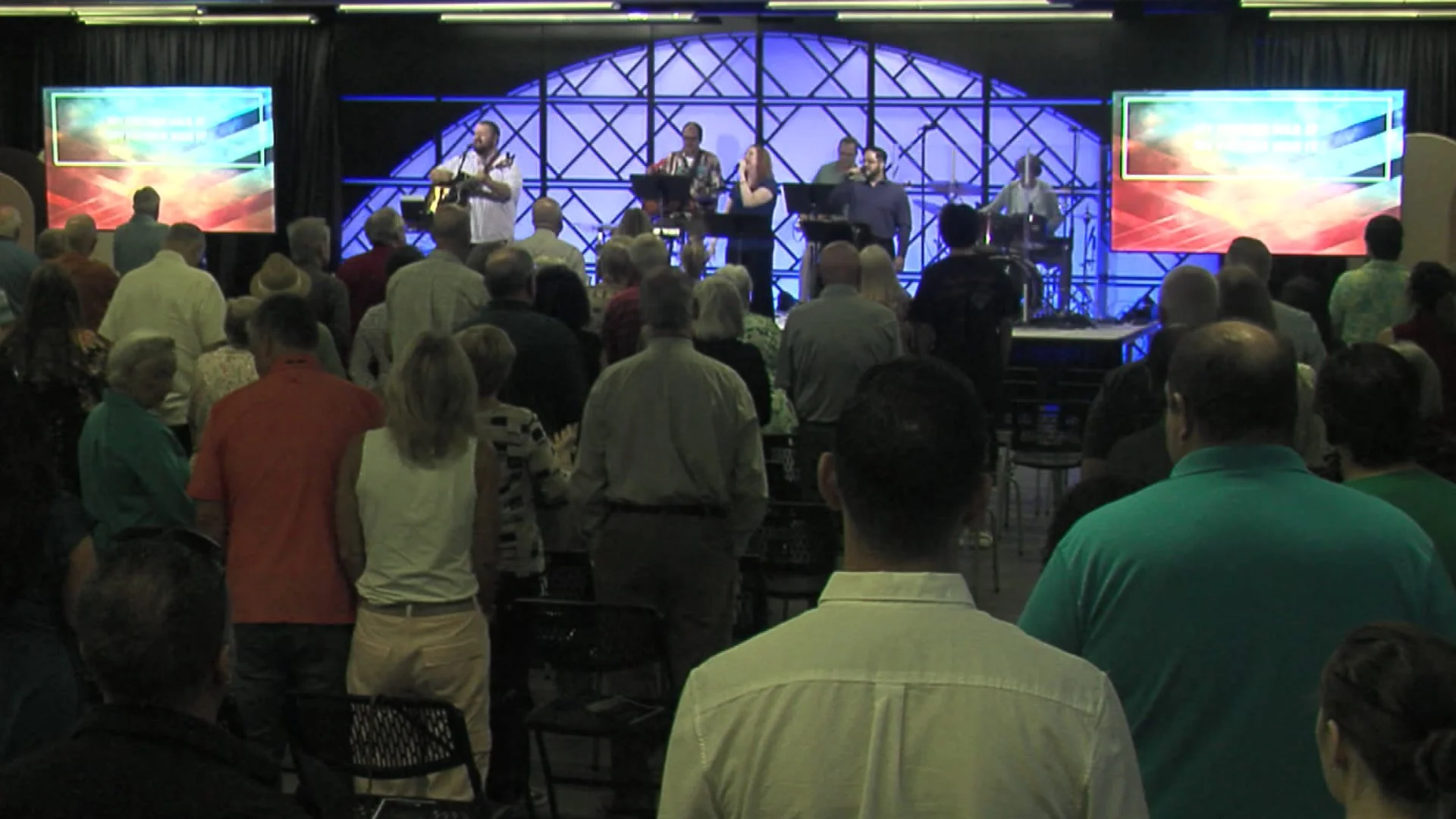
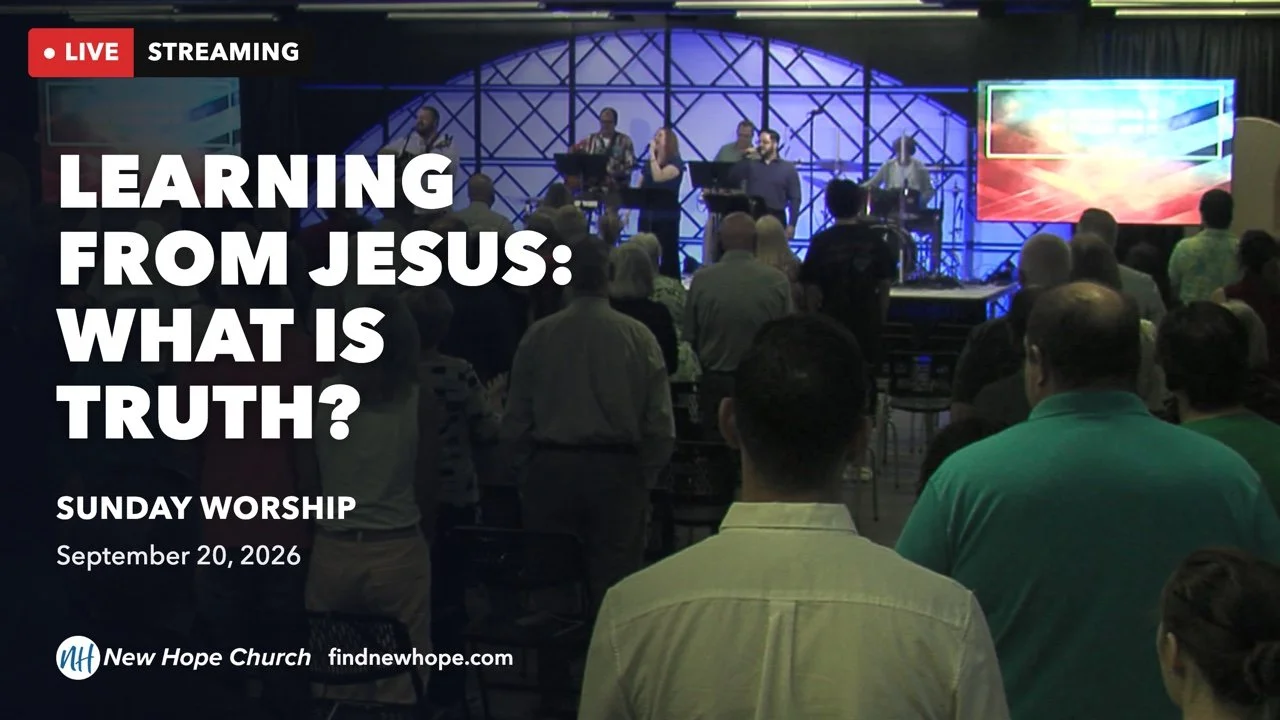
This Sunday, New Hope closed Learning from Jesus: The Sermon on the Mount with Pastor Vicki Harrison bringing the final message from Matthew 7:15-29 — and we did it in the Social Hall, which she named in her opening prayer.
"We know we can worship wherever. We can worship here. We can worship in the sanctuary. We can worship in the courtyard. We can worship under a tree. We can worship in our car. There is no place where we can go where your presence is not."
For six weeks the series has walked through Matthew 5–7 — days and days of teaching, Vicki said, and the closest thing to a manifesto Jesus ever gave. A picture of God's kingdom: God's priorities, God's values, what God blesses and what God doesn't, and the way God expects His followers to live.
And then Jesus closes it with warnings.
Danger Is Frequently Right Next Door
Vicki started somewhere unexpected — the Hillsborough County Sheriff's Office feed on Facebook.
You scroll past an arrest on the other side of the county and barely register it. Then one day you stop, and enlarge the mugshot, and think: I think I know that person. They live in my neighbourhood. They went to school with my kids. They were in a group with me.
"It's kind of creepy, especially if it's a violent crime, because it reminds you how close danger can be."
That, she said, is exactly Jesus' point as the Sermon on the Mount ends. Danger is not always somewhere out there. It is frequently right next door.
Known By Their Fruit
Jesus warns about false prophets — people who claim to speak for God but don't.
They rarely look the part.
"Most of the time, they don't look like the boogeyman. In fact, they fit in pretty neatly. They might be holding a Bible. They dress pretty well. Their hair is combed."
So Jesus gives a test that has nothing to do with presentation: you will know them by their fruits.
Good fruit looks like acts of humility, generosity and honesty. Someone who treats their family well. Someone with genuine friends — people actually want to be around them. Their presence builds people up rather than causing division.
Bad fruit is often subtler than outright scandal. Their presence causes division. They may have charisma but not character. They act holier than thou and have all the answers. They know everything wrong with your church after only a few visits. And when you question or disagree with them, that is when the ugly comes out.
Just Because You Believe It Passionately
Underneath the warning, Vicki said, Jesus is assuming something we don't always assume — that there is such a thing as truth.
"There's a truth that stands above us that doesn't need our agreement. It's truth because Jesus says it is truth. And it exists as truth whether we agree with it or not."
Which leads to the line she had the room repeat to each other:
"Just because we believe something passionately doesn't make it true. The only thing that makes it true is if it meshes with the word of God."
She then walked through three things widely believed that Scripture does not teach.
"God will not give you more than you can handle."
"It is a false teaching. This is more Bono than Bible."
We absolutely will get more than we can handle — God is not the one handing it to us. We live in a broken world where hardship happens. What God promises is to walk with us through it and give us what we need to endure.
"We don't have to love or care for people of other religions."
This one she introduced as stickier, and then told why it was personal. When her son Sam was seventeen, he was struggling with a war overseas in which women and children were being killed. A member of the church offered to talk it through with him — and told him it was fine, because the people dying were Muslim, and God doesn't care about Muslims.
Sam had been raised not to argue with adults, so he tried to engage politely. He came home doing everything in his power not to start sobbing.
"That's a false teaching that could have led to him leaving the church for good. False teachings are damaging. They cause pain and problems."
What kept him, she said, was that there were other godly people in this church — Julie Hamilton, Roberto Chaple — who spoke truth into him.
"Americans are more blessed — more favoured — than other people around the world."
The truth is simpler and much larger: God loves everyone. For God so loved the world. Jesus died for every person, and desires a relationship with every nation, every tongue, every ethnicity.
Words Are Not Enough
The hardest part of the passage is what Jesus says next: people will stand before Him having said and done all the right things, and He will answer, I never knew you.
Vicki didn't soften her own first reaction to it.
"I read this and my initial reaction is like — ah, what? What, Jesus? What in the world do you mean?"
Her answer: our spoken words don't mean much on their own. We can give lip service to Jesus all we want, but He is asking for more than the words. There has to be heart change — it is James' point about faith without works being dead.
"The disciples knew Jesus' truth, and they lived Jesus' truth. So just giving lip service is not enough. What's in our heart matters. How we live our lives truly matters to Jesus."
Two Houses, One Builder
Then the image most people already know — and one detail in it that is easy to miss.
The same builder built both houses. They were both seaside homes. The only difference was what they were built on: one on rock, one on sand.
"Now, we live in Florida. So we know what happens when you build a house on sand, right? I hardly have to tell you the rest of the story."
The rains come, the floods come, the winds come — a hurricane comes. The house on the rock sways. It takes wind damage. It loses some shingles. It stays. The house on the sand is off in the ocean somewhere.
And the point is not that building on Jesus keeps the weather away.
"He's not saying that building our lives on his truth is going to protect us from problems. The storms are still going to come. We're still going to face hurricanes. But when these storms come, they will not destroy us. We will remain standing — if our foundation is Jesus Christ, his truth."
What Are We Going To Do About It?
Vicki closed by walking back through the six weeks: the Beatitudes, and our identity as salt and light. The character Jesus expects. The way He raised the bar — it was said do not murder, but now do not even be angry; it was said love your neighbour, and now love your enemy. How to pray sincerely rather than like the hypocrites. Storing up treasure in heaven. Not worrying, because God will take care of what we need.
The crowd's reaction was astonishment — Jesus taught as one with authority, not like the teachers of the law. Her question was what ours is.
She named her own concern plainly:
"I worry a lot about the American church. That we have so pared down the Christian life — that we think the Christian life is just about saying yes to Jesus so that we go to heaven when we die. And yet Jesus is telling us in the Sermon on the Mount that there is so much more than that. Truth is so much bigger than that."
And then she went round the room by name, asking what Jesus had said to each person over these six weeks.
"He speaks to each of us in the same way he spoke to his disciples 2,000 years ago on that mountain. And he expects some kind of reaction. What kind of life change are we ready to offer him?"
"It's easy to hear these words and to leave here and just kind of forget them. Are we ready to really make a commitment to live as Jesus taught us? It's not easy. If it were easy, everybody would do it."
Listen to and subscribe to the audio-only podcast with your favorite podcasting app below.
Your giving is an act of worship. Your giving supports the mission and ministry of New Hope. We are changing lives, renewing the church, and transforming communities, here and abroad.
More Sermons in this Series
Other Sermons from Pastor Vicki
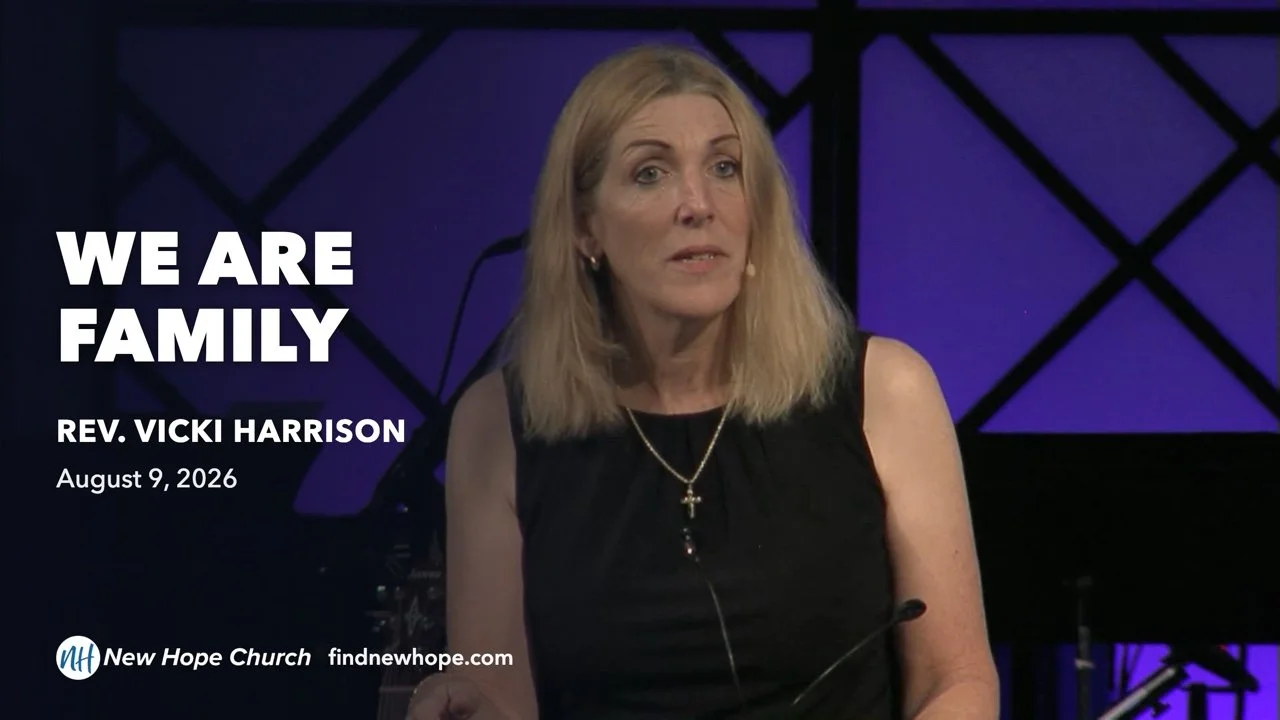
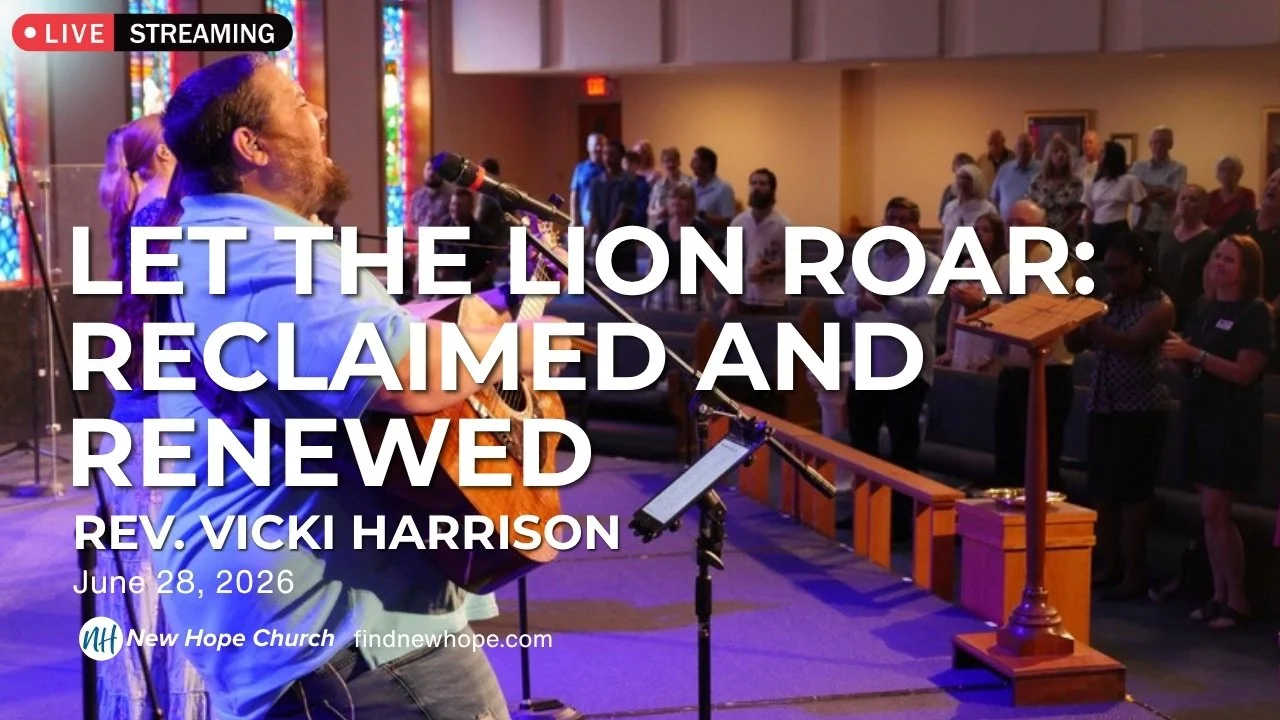
Vicki Harrison closes Learning from Jesus with the end of the Sermon on the Mount — false prophets known by their fruit, the warning that words alone are not enough, and two houses built by the same builder on different ground.